Is My Financial Advisor A Fiduciary? Top 3 things to know!
Listen, there is a “F” word you really need to know…and you can say it out loud without fear of children repeating! You need to check to see if your financial advisor is a fiduciary!
Today’s word is “fiduciary”.
You have probably already read this word in the news and it might have gone in one ear and out the other. It is one of those kind of hard to pronounce words that doesn’t sound glamorous. It may seem like an impending spelling bee test.
Thank goodness the press has been covering this word a lot more in recent years and many post reputable content to help consumers understand it. The term “fiduciary” empowers you to zone in on your search for a financial advisor.
But, why do you want to know if your financial advisor is a fiduciary?
Because you don’t want to question every piece of advice your professionals give you! You don’t want to think “Gosh, are they trying to sell me something? Do they really care about my future?” Read this post to discover how to protect your hard earned wealth…and future!
So let’s talk about what it means to be a fiduciary, why you should care ($$$ in your pocket and ongoing trust), and how to figure out if your current (or future) financial advisor is a fiduciary.
Is my advisor a fiduciary?
#1: Check for the CFP® marks
Did you know that the vast majority of financial advisors do not operate fully under a fiduciary standard? These advisors previously only had to meet the much lower bar of “suitability”. Which essentially says, if you could argue that it is not unreasonable to put the client in investment ABC then that’s fine. Even if it costs the client (YOU) more money. Now there is a Regulation Best Interest (RegBI) standard issued by The Securities and Exchange Commission (SEC) yet it still can be confusing as to when the representative must put your interests ahead of their own and how they are going to do that!
The CFP® Board states that “At all times when providing Financial Advice to a Client, a CFP® professional must act as a fiduciary, and therefore, act in the best interests of the Client.” Here are other duties that must be fulfilled:
- Duty of Loyalty
- Duty of Care
- Duty to Follow Client Instructions
Translated into plain English, the financial advisor must place the best interest of their clients before their own interests at all times. Seems straightforward – if it’s better to put the client in XYZ investment instead of ABC investment the financial advisor must recommend that.
Except, that hasn’t always happened and is much of the reason why this is a highly searched topic and the Department of Labor and the SEC continue to hone the definitions and requirements for fiduciary advice.
Right now there are approximately 95,000 CFPs out of 330,300 financial advisors reported in 2021 by U.S. Bureau of Labor Statistics. That is approximately 28% so it shows you need to be discerning about your selection. This is one way to check if your financial advisor is a fiduciary.
#2: Fee-Only vs. Fee-Based
Consumers are now aware of the important role of the fiduciary advisor. Which has led some financial salespeople to start referring to themselves as “fee-based”.
This is NOT the same thing as “Fee-Only”. The difference explained…and again.
We consider this a red flag. Whenever you see “fee-based”, recognize that what they really mean is “commission and fees”. It’s not that all commission-based advisers are “out to sell you something”; you just need to know how your adviser is paid and be prepared to ask hard questions.
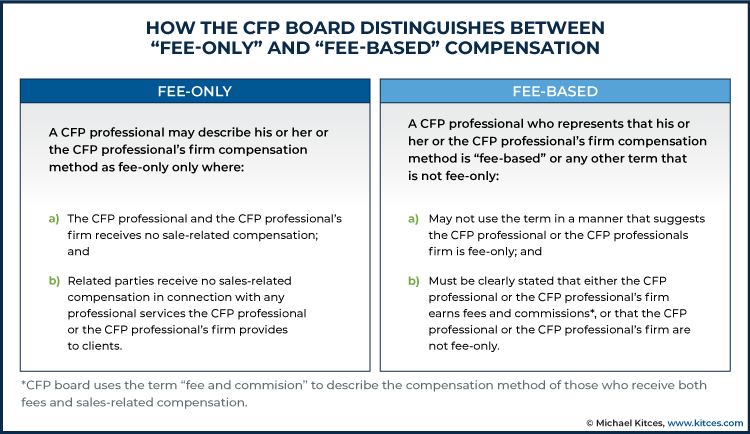
Here is how to ask those hard questions:
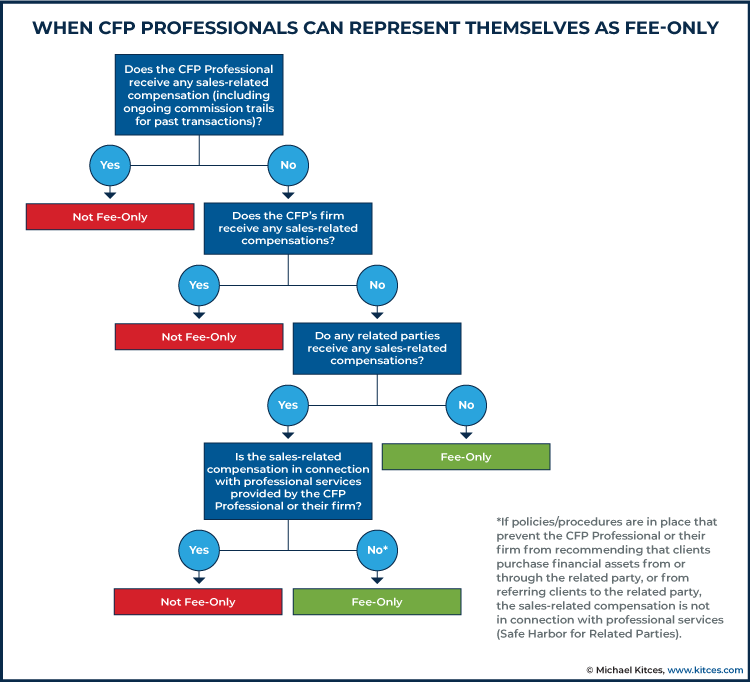
#3 Know WHY it matters
It could mean more money in your pocket. Why? Less money lost to exorbitant fees and fewer expensive products sold to you.
Different share classes of mutual funds were (and sometimes still are) an easy way to decipher costly products and kickbacks to financial representatives. If someone had an A share investment, it meant a higher up-front load and lower ongoing expense but that only made sense if you were going to hold the investment for approximately 7 years or more. Otherwise you wanted to be sure you had a lower up-front load. It was so complicated!
Now options are much more streamlined and it is easy to get institutional shares and other lower cost share classes which means lower expenses. Not to mention big financial institutions have come down in trading costs as well. Using cost effective Institutional Share classes and ETFs are one way we try to keep our clients’ expenses low when making investment recommendations.
BEWARE: you need to watch out for expenses on top of expenses!
Get a list of your fees and how to monitor them over time. All Registered Investment Advisors are required to disclose their fees (check their ADV or Form CRS). You should receive an investment advisor’s ADV prior to signing your client agreement. Read through it to fully understand the fees being charged.
We had a client join Spark from another investment advisory firm that was charging an ongoing management fee, an admin fee, a platform fee, and high investment costs at the mutual fund level. When asked about the layers of fees, the clients couldn’t get a straightforward answer from their advisor. At Spark, we believe in full transparency. We are proud of the work we do and confident in our fee structure.
Fiduciary Advice on Life Insurance and Annuities
What we see often in our work as Fee-Only CERTIFIED FINANCIAL PLANNERSTM are people who are sold inappropriate life insurance and annuity products. This is not to say that there is no place for life insurance and annuity products (there definitely is!). What we are saying is that frequently we see people sold expensive, permanent life insurance policies that don’t adequately insure them and are not evaluated on an ongoing basis. Their premiums are paid at the expense of other long-term investing goals.
It isn’t uncommon to hear from middle career professionals who have a permanent life insurance product they took out years ago from “a buddy who worked at ….” and yet the policies haven’t been reviewed in years. Many times based on their financial situation, they could have been better served with a term-life insurance policy if there was a current (or projected future) life insurance need and redirecting premiums toward tax preferred investment accounts.
But term insurance policies pay a tiny commission to the insurance agent compared to a whole life policy.
So, how can you protect yourself and your money?
First, ask your advisor how they are paid. Are they paid by mutual fund companies to place your money in their investments (i.e. on commission)? Do they receive commissions from alternative investments? Do they receive incentive – monetary or otherwise – from their company to sell certain types of insurance or investment products?
Or is your advisor paid directly by you?
If you think you don’t pay your advisor, then your advisor very likely is being paid by the investment or insurance companies. This presents a potential conflict of interest.
Another distinction: Registered investment Advisers (RIA) are required to act as fiduciaries. Broker dealer representatives (registered reps) are not required to act as fiduciaries. Here’s the trick, some advisors are “dual-registered” which means they are RIAs and Broker-dealers.
A part-time fiduciary is not sufficient.
Dual-registered representatives or “dual-hat” wearers are affiliated with both a broker dealer and are registered investment advisors. This confuses things even further. This means conflicts of interest exist because there is a foot on both sides of the fence. In our industry, it is framed as “best of both worlds” yet to the consumer, it means they need to ask more discerning questions especially because these types of advisors are growing in numbers.
Ask your advisor flat out “Are you a fiduciary?” “Will you acknowledge your fiduciary duty to me in writing?” “Is there anything that prohibits you from being a fiduciary 100% of the time?” You want to know your financial advisor is a fiduciary for you at all times.
Here’s an example why this matters, let’s say you receive a $30,000 bonus. You might wonder if you should invest that money in your portfolio (which your advisor would be paid on) or pay down your mortgage (which your advisor would not benefit financially from). A fiduciary would be required to work out the advantages and trade offs of each strategy with you to determine what is truly best for you.
On the other hand, a financial representative operating under the suitability standard could simply pitch you to invest the money with him without determining what is actually in your best interest.
Are we biased?
You might say that we are biased because we choose to work as Fee-Only fiduciary advisors. We absolutely are.
Personally, I have been on both sides of the industry in my career and intentionally chose to go Fee-Only years ago.
Spark Financial Advisors is dedicated to providing people advice in this way because we firmly believe it is in your best interest.
Additional resources:
NAPFA’s resource on how to find an advisor: https://www.napfa.org/financial-planning/how-to-find-an-advisor
NAPFA’s checklist when interviewing advisors and their services: http://s3.napfa.cql-aws.com.s3.amazonaws.com/files/Consumer/AdvisorComparisonToolFinal-fillable.pdf


